Interpretable AI model for regulated businesses

Reasoning models don't always say what they think. Ours does.

RESEARCH PAPER
Reasoning models don't always say what they think
Anthropic
Read the paper →
Who uses it

Built for regulated industries

€ Insurance underwriting & pricing

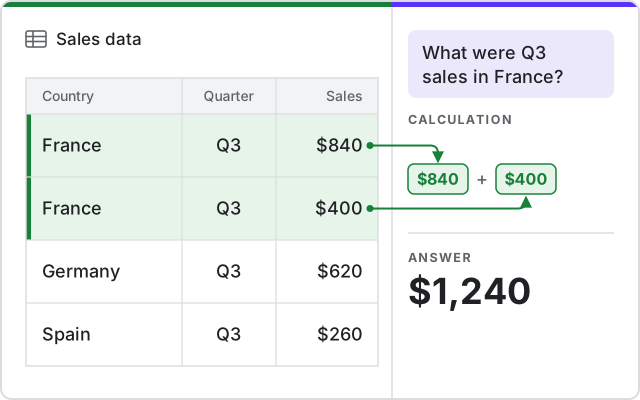
Check the fields and the queries behind each premium calculation.

Credit scoring

Reviewers can see how a result was calculated from the application data.

Healthcare & benefit eligibility

Check the rules and the rows used for each eligibility result.

Why interpretability

Generative AI

Interpretable AI

Black box
Black box

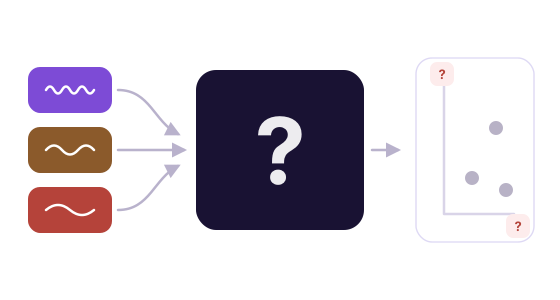
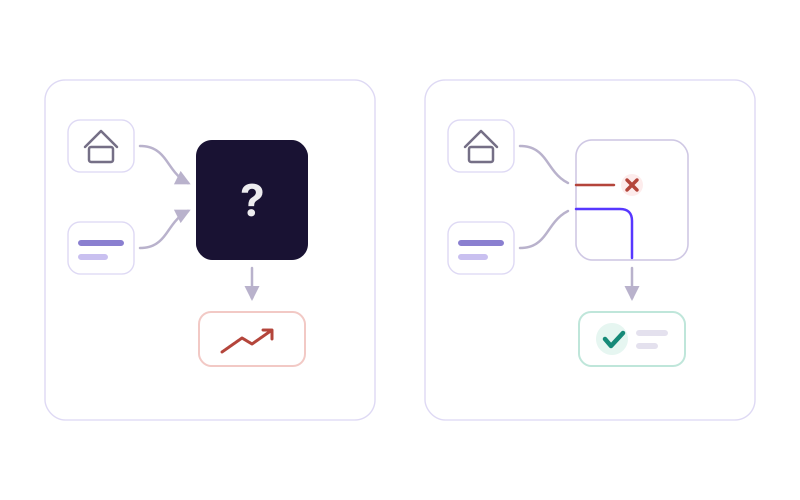
Generative AI is like an alien that read all the internet text and chose its own internal representation to "see" color. These representations are called dimensions and we don't know what they mean. The frequency of light could be its dimension, or something we don't understand. Neither do we know how they interpret the words we speak to it.

Understandable
Understandable

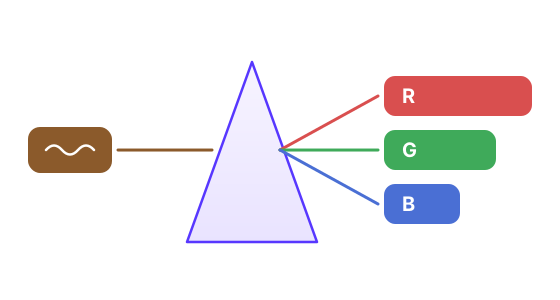
Humans see brown as red, green and blue through three cone types in our eyes. Prereasoner is trained the same way. Its dimensions are named after schema.org properties such as country and currency. So, the question and the answer can traced back to those properties in our model.

Unpredictable
Unpredictable

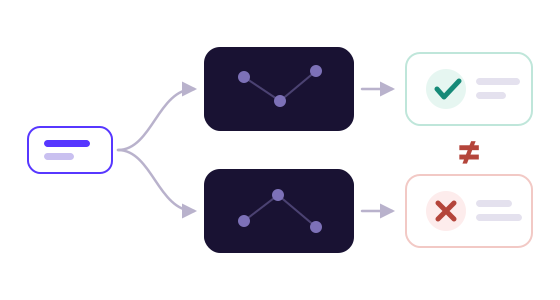
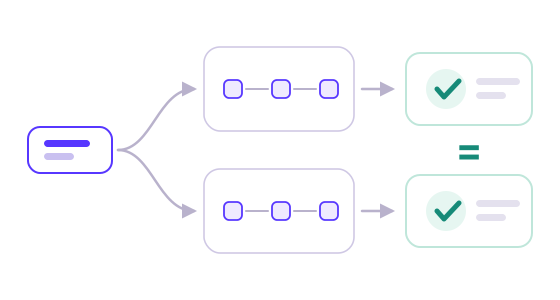
Generative AI predicts the most probable word that comes next. It can pick one word the first time and another word the second time. That makes them, human-like in chatbots. But, in a financial calculation, it means the same question can return a different number.

Predictable
Predictable

Prereasoner converts a question into named dimensions such "SUM" of "SALES" in "FRANCE". This is converted into an SQL query or Python code, deterministically. When it runs, the database or code computes the number. With the same data, you get the same query and the same answer.
Why us

Named dimensions, not a confidence score

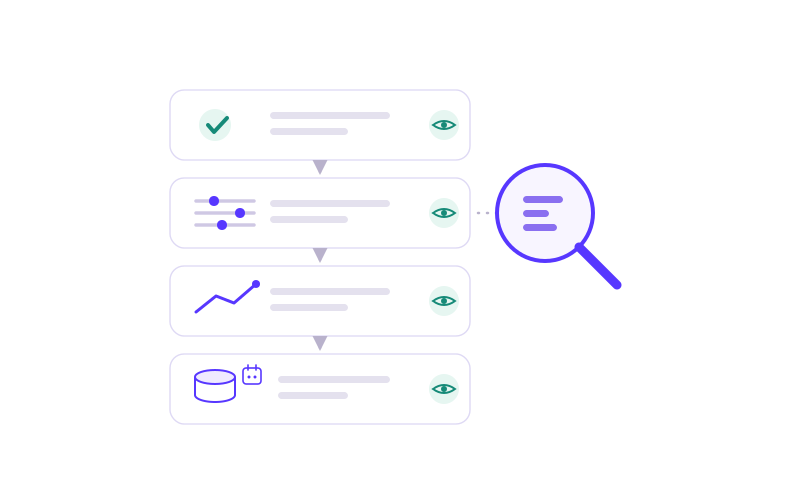
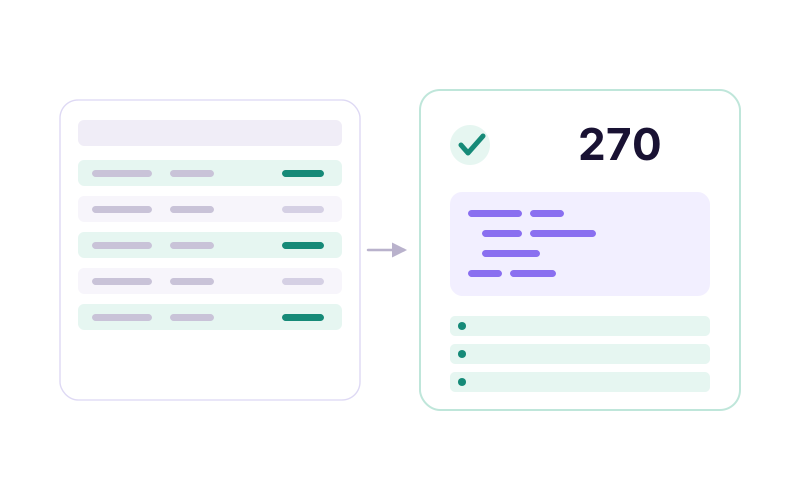
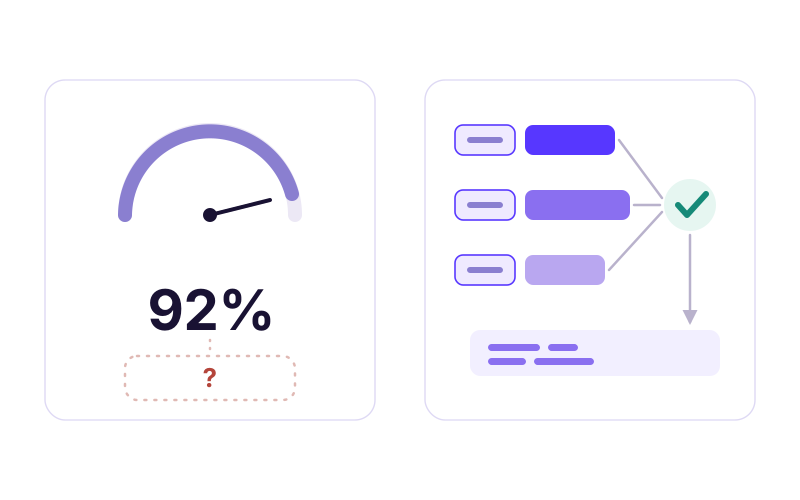
A confidence score in predicting the next word is not a reason. Prereasoner shows the SQL query it ran, why that query was chosen and the rows behind the answer. A reviewer can check each step and the calculation, then accept or reject the answer.

Named dimensions, not a confidence score
A proxy field cannot hide in the query

A proxy field cannot hide in the query

An opaque model can decide an insurance premium based on an address or another proxy field that nobody can inspect. Here the number comes from a query. If a column is used in a filter, join or calculation, it appears in the SQL, so a reviewer can find it and question it.

Transparency goes all the way to the source

The engine is Apache 2.0 and the weights are published. The code shows how each dimension is defined and how the model was trained. Your auditor does not have to take our word for how the model reasons. They can read the reasoning steps, as well as our source code.

Transparency goes all the way to the source
What a reviewer can check
What a reviewer needsGenerative AIPrereasoner
Explain why a decision was madeA generated explanation that may not be faithfulThe derivation itself: SQL query, steps and rows
Reproduce the answer for an auditorCan vary with samplingSame query and answer with the same data and setup
See which fields drove the resultNot visible inside the modelEvery column used is in the query
Know where a number came fromWritten by the modelComputed by the database from your rows
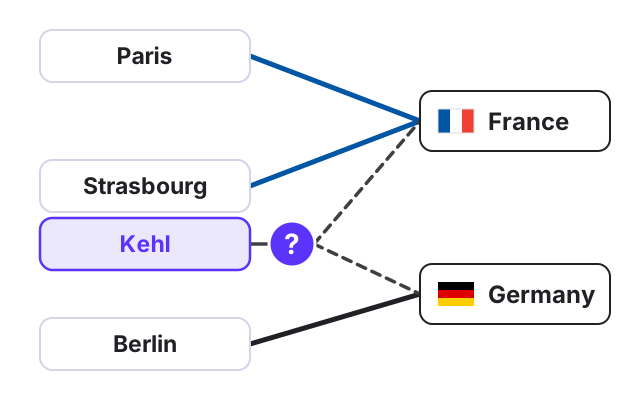
Handle a question the data cannot answerTends to answer anywayAsks you to clarify in supported cases
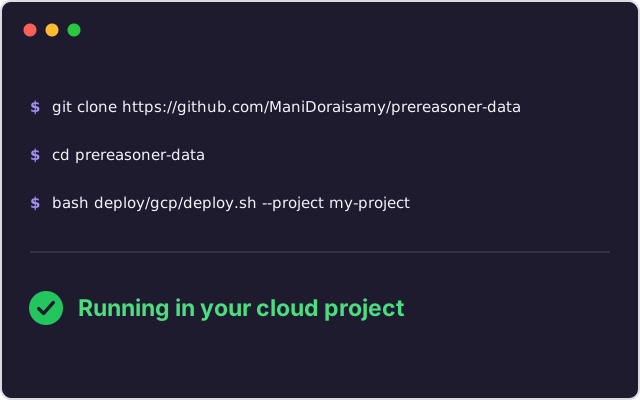
Keep regulated data in your own cloudDepends on the vendorSelf-hostable in your own cloud project
One auditable engine

Put it to work in the tools your teams already use

Start free

When a wrong number is a liability, you can't use AI that guesses

Prereasoner shows the query and rows behind each answer.